Hi, I'm Meghana!
I'm a B.Tech student in Computer Science and Engineering (Data Science) at VIT University, where I am advised by Dr. Joe Dhanith. My research focuses on large multimodal models for reasoning, spanning representation learning, domain generalization, and cross-modal intelligence. I'm broadly interested in how multimodal systems learn structure across vision, language, and neural signals, and how these models become more robust, interpretable, and adaptable.
Currently, I'm a Machine Learning Intern at Nagasaki University advised by Dr. Muthu Subash Kavitha, where I work on improving implicit reasoning in large multimodal models. In parallel, I also work with Dr. Min Xu at the Xu Lab at Carnegie Mellon University on multimodal learning and medical AI, focusing on EEG–fNIRS fusion through state-space–based sequence modeling. Prior to this, I was a Machine Learning Intern at MulticoreWare Inc., where I worked on model optimization and post-training quantization, and on finetuning large-scale transformers for efficient deployment. I also interned at the Center for Neuroinformatics with Dr. Jeetashree Aparajita, where I worked on multimodal EEG–fNIRS learning fusion pipelines for cognitive stress analysis. I am a recipient of the Raman Research Award at VIT for my research contributions.
Outside of academics, I love dancing. I lead major cultural events on campus and serve as President of VITc's dance club, where I choreograph, perform, and build spaces for artistic expression.
email / linkedin / github / google scholar

Selected Works
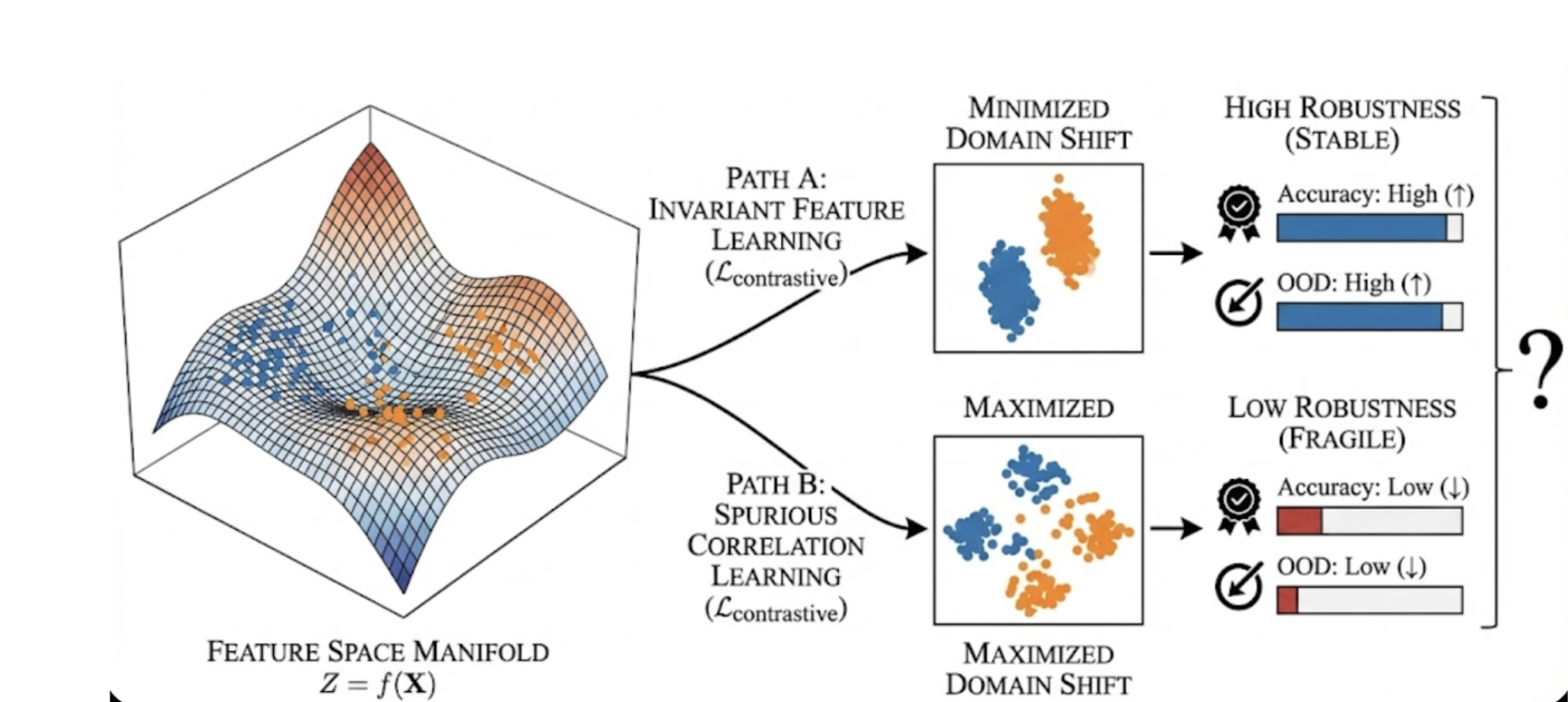
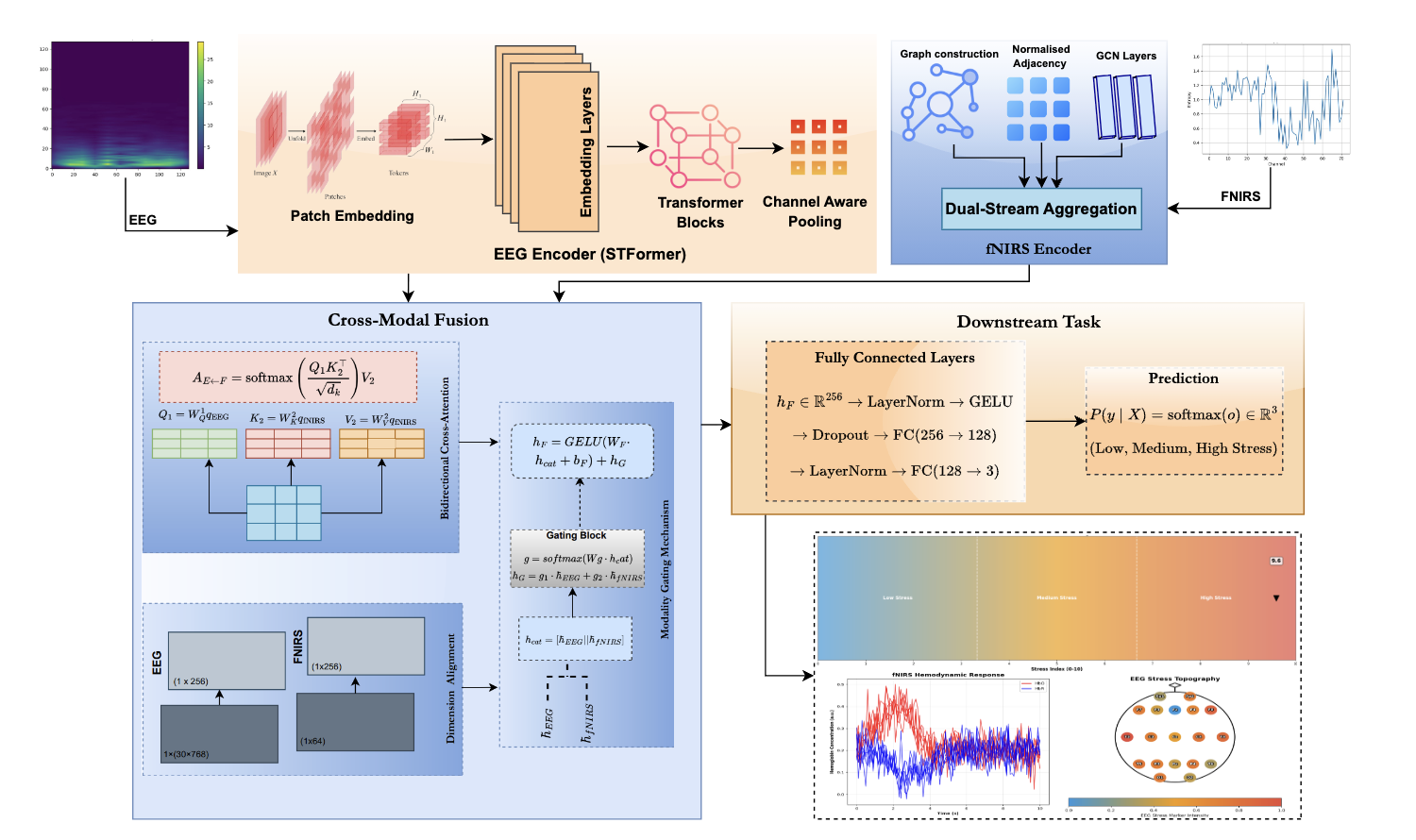
Graph-Guided Cross-Modal Representation Learning of EEG–fNIRS via Spatio-Temporal Transformers for Stress Analysis
Meghana Sunil
Submitted: Computer Methods and Programs in Biomedicine
Cross-modal stress classification benefits from explicitly modeling EEG–fNIRS structural dependencies, where graph-guided fusion yields more reliable spatio-temporal representations.
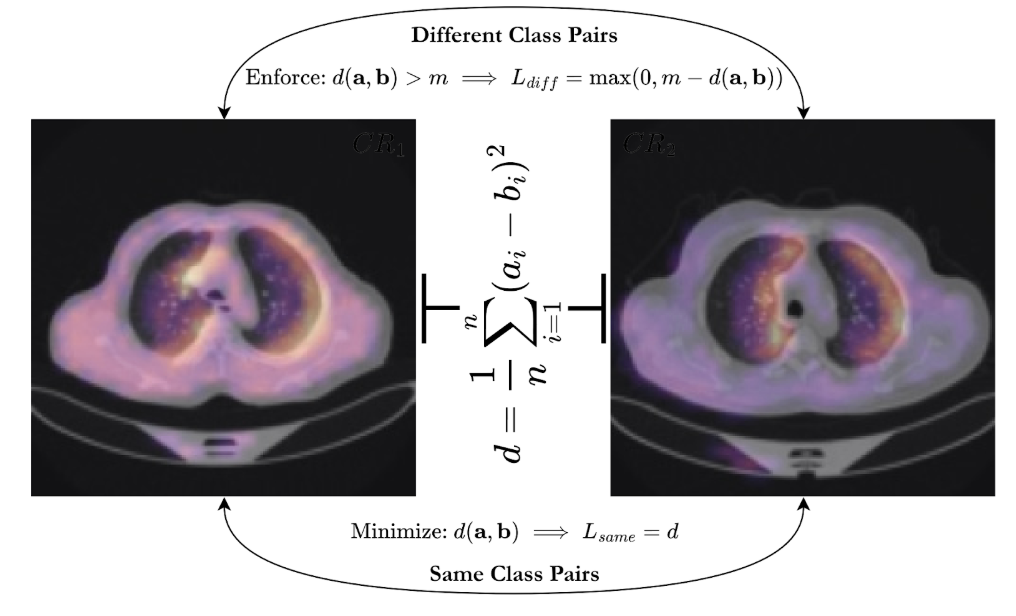
Encouraging Discriminative Attention Through Contrastive Explainability Learning for Lung Cancer Diagnosis
Meghana Sunil
IEEE Access
Enforcing contrastive constraints on attention maps improves both classification performance and attribution consistency, showing that explanation-guided objectives can regulate feature selection.
For more research work, please visit my Research page.